
María del Rocío Chapela Mendoza was born in Mexico City (Mexico) on August 6th, 1946, and passed away on June 6th, 2025. She grew up in a family of nine siblings; it is often recalled that several of the younger children would play and jump around her while she remained undisturbed, immersed in reading. She studied Medicine at the School of Medicine of Universidad Autónoma de Mexico (UNAM) and completed her specialization in Pulmonology at what was then the National Institute of Pulmonary Diseases, now Instituto Nacional de Enfermedades Respiratorias Ismael Cosío Villegas (INER). At INER, she served as Chief of Clinical Service, Head of the Postgraduate Education Department, Deputy Director and Director of Education, and Chair of the Research Ethics Committee.
In the early 1980s, she advocated for the allocation of dedicated space within the institute for the care of patients with interstitial lung diseases and asthma. Later, as head of what was then Pavilion 1 in the 1990s, she relinquished her office and a patient room to establish the first Sleep Disorders Laboratory and Clinic at INER. She founded and subsequently directed the INER Asthma Clinic during two periods: from 1979 to 1992 and from 2003 until her retirement. During her first tenure, she completed an academic fellowship in Vancouver, Canada, where she strengthened academic and research ties with Dr. Peter Paré’s group – collaborations that proved highly productive upon her return to INER. She developed a protocol-driven, comprehensive model of patient care that emphasized systematic training in self-management. This strategy was later adopted in other hospital departments and integrated into the education of physicians and allied health professionals. Pavilion 1, her pavilion, consistently received requests for academic rotations and observerships and was known for attracting enthusiastic young physicians eager to learn.
Committed to supporting patients beyond the clinic, Dr. Chapela realized one of her most cherished goals: the creation and establishment of the Asociación de Asma A.C., which fostered patient and family participation and empowerment through educational strategies aimed at improving disease control and effective management of their needs. The Asthma Clinic she founded remains active today. She will always be remembered for placing her ear directly against patients’ backs to listen attentively to breath sounds. The interstitial lung disease and sleep disorders clinics she helped establish also remain active (Figure 1).
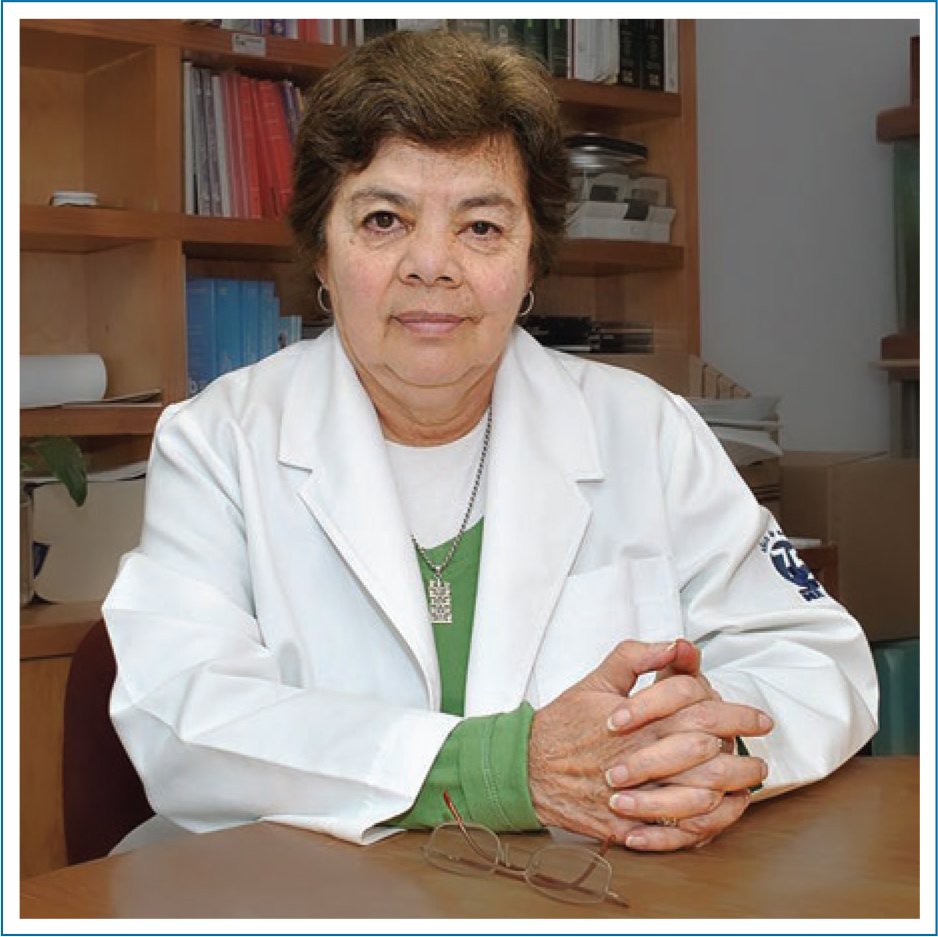
Figure 1. Dr. Rocío Chapela Mendoza.
Research: her other passion
From her residency onward, Dr. Chapela demonstrated a strong interest in research. Together with Dr. Moisés Selman, she organized the Pulmonary Fibrosis Working Group, integrating clinical and basic research. This multidisciplinary team achieved significant productivity and international impact and established a collaborative model later applied to other areas, including asthma research. She collaborated with leading research groups in the United States, Canada, France, New Zealand, and other countries, particularly in asthma research, resulting in important scientific reports.
Dr. Chapela authored 68 scientific publications indexed in PubMed, edited three books, and contributed to multiple book chapters. She served as an undergraduate and graduate professor at the UNAM School of Medicine and as an undergraduate professor at Instituto Politécnico Nacional. She was a member of Academia Nacional de Medicina de México, a level “F” investigator within the National Institutes of Health system, and a member of the National System of Researchers. Furthermore, she served as President (the 2nd woman to hold this position) of the Mexican Society of Pulmonology and Thoracic Surgery (SMNyCT) from 2001 through 2003 and as President of the National Council of Pulmonology. The SMNyCT awarded her the Donato G. Alarcón/Ismael Cosío Villegas Medal in recognition of her contributions to the society and to the respiratory specialty. Internationally, she was an active member of the American Thoracic Society, the European Respiratory Society, the Latin American Thoracic Association, and the International Union Against Tuberculosis and Lung Disease.
Rocío Chapela was one of the most influential figures at INER and within the SMNyCT over the past four decades, contributing significantly to the transformation of the Huipulco Sanatorium for Tuberculosis Patients into the Instituto Nacional de Enfermedades Respiratorias. She was admired and respected by institutional leaders, colleagues, and especially her patients. A gracious host, she opened her home to many who found refuge there. Her exemplary partnership with Nacho and her unwavering support for Ietza and Teoshia in pursuing their ideals and building their lives will always be remembered.
Dr. Chapela was an extraordinary woman whose legacy transcends time. Her thoughtful and passionate dedication to pulmonology and science left an indelible mark on our medical and scientific community. She was a model professional, always committed to advancing knowledge and promoting the well-being of others. She spoke with authority and vision, advocating consistently for vulnerable populations. Courageous and forthright, she expressed her convictions with clarity and strength, combining scientific rigor with deep human sensitivity. She instilled in her students both passion for their profession and compassion for their patients. She treated friends and dissenters alike with equal respect. A master of respiratory medicine and of life itself, she generously shared her wisdom and unconditional support with many, including the authors, who remain profoundly grateful.
Her warmth, empathy, and leadership made her deeply cherished by colleagues, patients, and friends. Today, we remember with great affection a woman whose work and heart inspired all of us to strive for a better world. Her spirit and example will live on in every advancement and in every life she touched.
